


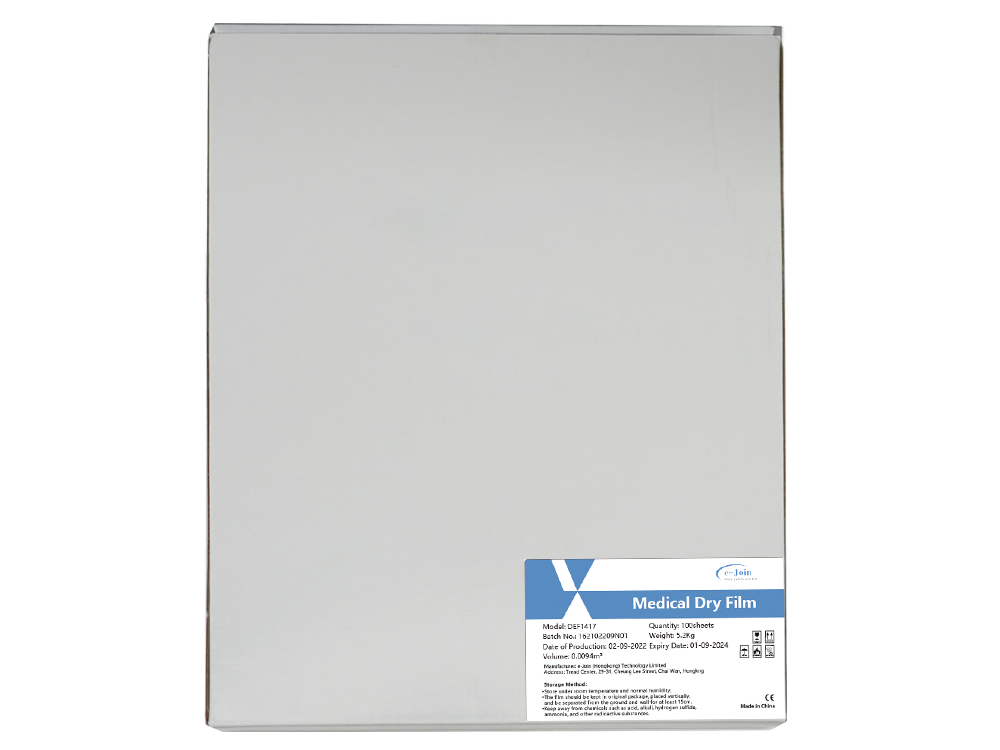




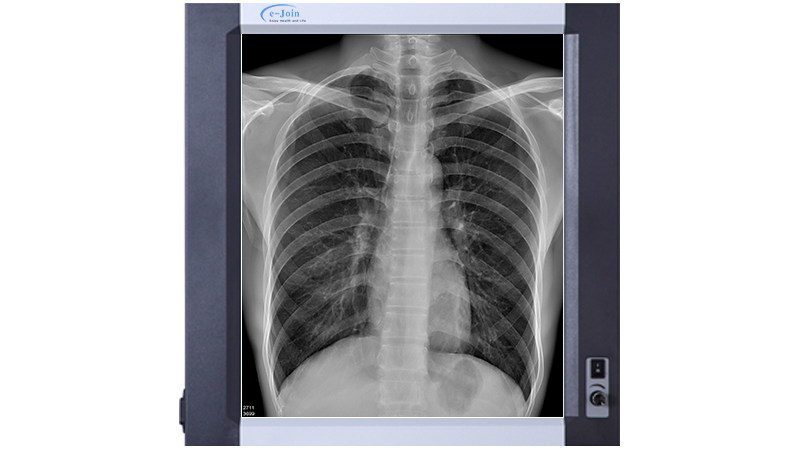
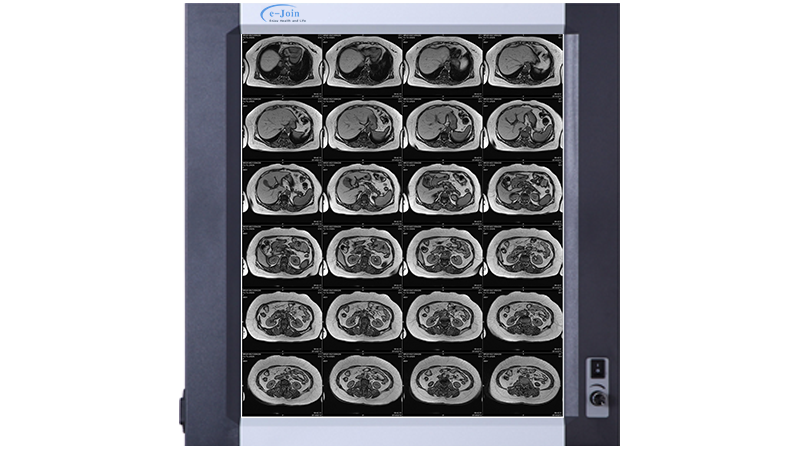
Medical dry x-ray imaging clear blue base thermal film (DEF) is a heat-sensitive, blue system used in the medical dry imager (DT300 or DT500) to provide excellent diagnostic visualization of subtle detail, and a popular neutral black image tone. Capable of greyscale hardcopies with the high throughput of the advanced Medical Dry Imager DT300, the film can yield a maximum density 3.0D and a minimum density 0.21D. Under the same print parameters, the image quality produced by DT500 will be much finer than that produced by DT300 without loss of maximum density. The dry thermal imaging printing technology eliminates the related environmental issues with “wet” chemistry. Integrated the advantages of direct digital imaging technology with the crispness of cool-toned film, it can brighten the captured images with low noise and superb density uniformity.
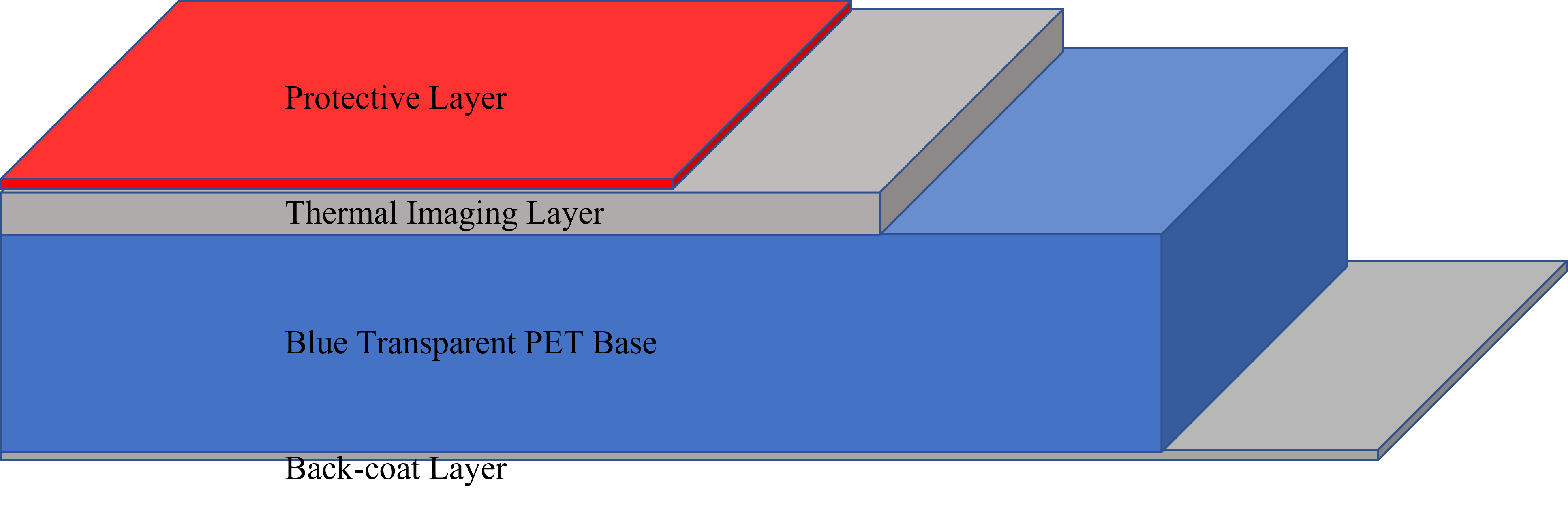
The film contains 175-µm blue transparent PET base, a 28-30µm thermal imaging layer coated on the PET base, a 1-3µm protective layer formed on the imaging layer, and a 1-2µm back-coat layer coated on the other side of the PET base. The protective layer containing lubricants, pigments and adhesives acts mainly as lubrication, scratch-proof and waterproof purposes. By adding matting agents and antistatic agents into the back-coat layer, the film during printing avoids mutual adhesion and aggregation of static electricity.
The film was cut out with four rounded corners of two sizes to allow users to quickly identify the print and non-print sides of the film. Meanwhile, the corners allow the films to be handled in the normal way as regular X-ray film. The film is daylight-packaged and comes 100 sheets per box with a RFID label, 5 boxes per pack.
During the coating process, the protective layer formed by evaporation of water solvent has certain water absorption. Under high humidity conditions, damp protective layer in contact with the back of other films for a period will produce a certain adhesion. The film-feeding wheel will have a greater probability to transfer several self-adhesive thermal films together into the printing path. In contrast, under dry conditions, static electricity is generated by friction between the film-feeding wheel and the insulating thermal film. Under the influence of static electricity, the moving film will attract the adjacent film stored in the box, and be transmitted to the printing path. Printing multiple films at the same time can lead to film jams or the formation of misplaced images causing unnecessary film waste. The thermal film (E) uses a high waterproof adhesive and anti-static agent on the back, greatly reducing the probability of the above problems.
The thermal print head is constantly subjected to physical friction of the thermal film in the long process of high temperature printing. At the same time, the surface coating of the thermal film will also cause slight chemical corrosion to the thermal print head. In the absence of other external factors and in the case of routine maintenance, the life of the thermal print head is greatly affected by the physical and chemical properties of the surface coating of the thermal film. With the systematic matching of the thermal film (E) and DT300 or DT500, the print head can achieve at least 50,000 times of printing.
The film is intended for use as a general-purpose diagnostic film to record a full range of images from various modalities including Computed Tomography (CT), Digital Subtraction Angiography (DSA), Magnetic Resonance Imaging (MRI), Computed Radiography (CR), and Digital Radiography (DR).
e-Join (Hongkong) Technology Limited | ©2026 All Rights Reserved