

“Although a silent world may seem destined for solitude, since fate has brought us together, let us make medical care a little warmer.” Guided by this humanistic belief, Tangdu Hospital of Air Force Medical University successfully conducted multidisciplinary collaborative diagnosis and treatment for a deaf and mute patient with scoliosis on April 15, 2015. During the course of treatment, the hospital leveraged medical dry films and medical image printers provided by e-Join (Shenzhen) Technology Limited to overcome dual challenges in communication and diagnosis, demonstrating through concrete action the deep integration of precision medicine and humanistic care.
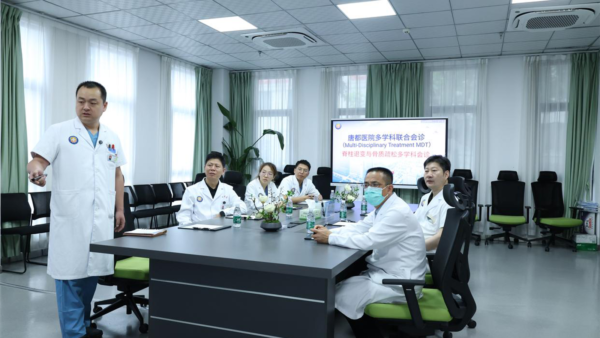
For deaf and mute patients with scoliosis, seeking medical care often involves a double burden: not only the physical pain and mobility limitations caused by spinal deformity, but also the fear, anxiety, and helplessness arising from communication barriers. To ensure that this special patient received the highest-quality care possible, Tangdu Hospital decided to break from conventional approaches and initiate a multidisciplinary team (MDT) model. Experts from multiple specialties, including orthopedics, radiology, anesthesiology, and rehabilitation medicine, were brought together to develop an individualized diagnosis and treatment plan tailored to the patient’s needs.
Accurate imaging diagnosis serves as the foundation for precision treatment. In this complex diagnostic and therapeutic process, the medical dry films and image printers provided by e-Join (Shenzhen) Technology Limited played a crucial role. The high-resolution films precisely displayed the subtle structural features of the patient’s spinal deformity, providing the multidisciplinary team with reliable imaging evidence and strongly supporting diagnostic accuracy.
Although the treatment room was free of spoken conversations, the expert team established a heartfelt dialogue with the patient through written communication, simple gestures, and eye contact. After carefully reviewing the patient’s medical history and completing physical examinations, the specialists integrated the imaging findings and conducted in-depth discussions on key aspects, including surgical risk assessment, anesthesia selection, and postoperative rehabilitation strategies. Through close multidisciplinary collaboration, the hospital ultimately clarified the patient’s subsequent treatment plan, striving to help restore spinal alignment through precise interventions and rebuild the patient’s confidence in life.
Through multidisciplinary collaboration as a bridge and advanced imaging technology as support, Tangdu Hospital provided the deaf and mute patient with scoliosis with medical care that combined both compassion and excellence. This was not merely a treatment for a medical condition, but also a meaningful convergence of physicians’ compassion and the power of technological innovation.